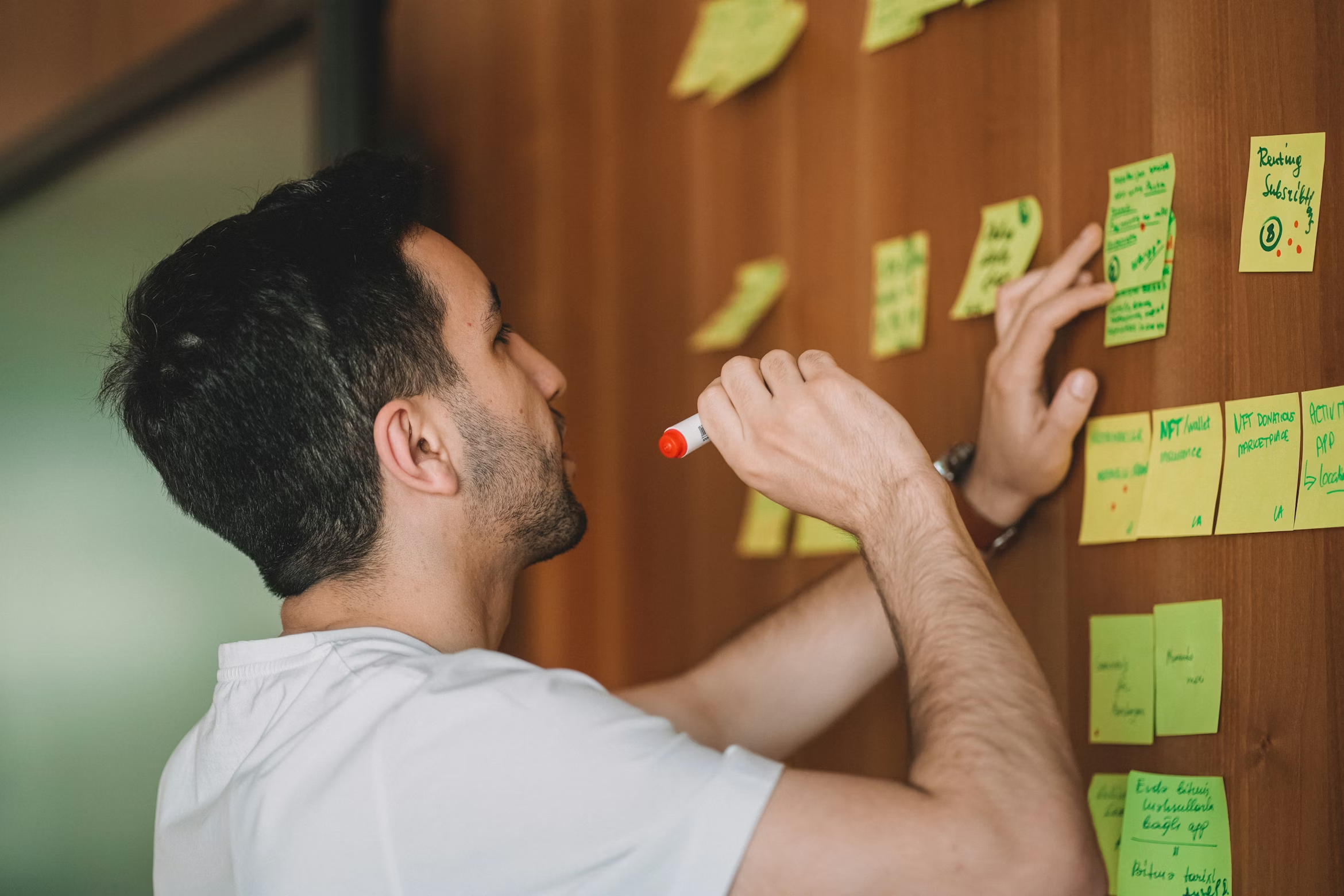
Workshops are one of the most powerful tools a manager has for solving problems, generating ideas, and building alignment across a group. But there is a vast difference between a workshop that produces real outcomes and one that feels like a waste of everyone's time. The difference almost always comes down to facilitation. A skilled facilitator creates the conditions for productive thinking, manages group dynamics, and ensures that the session ends with clear, actionable results. The good news is that facilitation is a learnable skill, and every manager can get better at it with practice and preparation.
A great facilitator does not dominate the conversation. They create the space for the best thinking in the room to emerge.
Designing the session
Workshop design is where the real work happens. For more on this, see our guide on meeting notes. A well-designed session flows naturally, keeps energy high, and guides participants towards useful outcomes without feeling forced. A poorly designed one meanders, runs out of time on the important bits, and leaves people wondering what the point was. Invest more time in design than you think you need to, because every minute spent planning saves several minutes of confusion during the session itself.
- Start with the outcomeDefine what success looks like before you design anything else. What decisions need to be made? What questions need answering? What should participants leave with? Working backwards from the desired outcome keeps the design focused and prevents scope creep.
- Structure the flowA good workshop follows a clear arc: diverge, then converge. Start with activities that open up thinking and generate breadth, then shift to activities that narrow down and prioritise. This rhythm gives people permission to think broadly before asking them to commit.
- Time each activityAllocate specific time blocks to each part of the session and build in buffer. Without time constraints, discussions expand to fill whatever space is available. Tight timings create focus and urgency. If you find yourself consistently running over, you have too much content for the time available.
- Choose activities wiselyMatch the activity to the goal. Brainstorming works for generating ideas, dot voting works for prioritisation, and small group discussions work for exploring nuance. Avoid using the same format throughout, as variety keeps people engaged and draws out different types of contribution.
- Prepare materials in advanceWhether physical or digital, have all your materials ready before the session. Templates, prompts, sticky notes, voting mechanisms, and shared documents should be set up and tested. Scrambling to prepare materials during the workshop wastes time and undermines your credibility as facilitator.
Setting the room
The environment in which a workshop takes place has a significant impact on the quality of thinking it produces. The meeting notes feature in Manager Toolkit supports this. This applies to both physical and virtual settings. The first few minutes of any workshop set the emotional tone for everything that follows, and a facilitator who takes the time to create the right conditions will get far better contributions from the group than one who dives straight into the content.
- Open with contextStart by explaining why the group has been brought together, what the session aims to achieve, and how the outputs will be used. People engage more fully when they understand the purpose and know their contributions will matter beyond the room.
- Set ground rulesEstablish a small number of clear norms at the outset. These might include things like "one conversation at a time", "challenge ideas, not people", or "phones away during activities." Ground rules give you a reference point if behaviour becomes unhelpful later in the session.
- Create psychological safetyPeople contribute their best ideas when they feel safe to take risks. Acknowledge that there are no wrong answers during divergent phases, thank people for contributions, and visibly welcome dissenting views. If a senior leader is present, ask them to speak last so they do not anchor the group.
- Manage energy earlyStart with an activity that gets everyone talking, even if it is brief. A short icebreaker, a quick round of introductions, or a warm-up question lowers the barrier to participation and breaks the silence that often hangs over the start of a workshop.
Facilitation techniques
Once the session is underway, your role shifts from designer to facilitator. This means managing the conversation, reading the room, and making real-time decisions about when to let discussion run and when to move the group on. Our article on retrospectives explores this further. Good facilitation is a balancing act between structure and flexibility. You need enough structure to keep things on track, but enough flexibility to follow the energy when the group lands on something important and unexpected.
- Listen more than you speakAs facilitator, your job is to draw out contributions from others, not to share your own opinions. Ask open questions, summarise what you hear, and redirect the conversation when it drifts. The less you talk, the more space there is for the group to think.
- Balance participationWatch for patterns where the same voices dominate while others stay silent. Use techniques like round-robin sharing, written brainstorming before discussion, or small breakout groups to ensure quieter participants have space to contribute without having to compete for airtime.
- Park tangents gracefullyWhen a discussion veers off topic, acknowledge the point and capture it on a visible "parking lot" list. This shows respect for the contribution while protecting the session's focus. Return to parked items at the end if time allows, or commit to following up separately.
- Use silence deliberatelyAfter asking a question, wait. Silence feels uncomfortable, but it gives people time to think. If you fill every pause with your own words, you rob the group of their best ideas. Count to ten in your head before jumping in, and you will be surprised by what emerges.
- Read the energyPay attention to body language, engagement levels, and the quality of contributions. If energy is dropping, call a break or switch to a different activity format. If a topic is generating heat, consider whether to explore it further or table it for a separate conversation.
Closing with outcomes
How you close a workshop determines whether it leads to action or fades into memory. The final portion of the session should be dedicated to consolidating what was discussed, confirming decisions, and assigning clear next steps. Without this closure, even the most energising workshop will lose its impact within days as people return to their regular work and the momentum dissipates.
- Summarise key decisionsBefore the session ends, walk through the decisions that were made and the priorities that were agreed. Ask the group to confirm them explicitly. This prevents the common problem of people leaving with different interpretations of what was decided.
- Assign clear actionsEvery outcome should have an owner and a deadline. "We agreed to improve our onboarding process" is not an action. "Sarah will draft a revised onboarding checklist by the 15th" is. Without specific ownership, workshop outputs become shared intentions that nobody acts on.
- Capture everything visiblyDocument the outputs in real time so that participants can see the record before they leave. Share a written summary within 24 hours while the session is still fresh. The longer you wait, the more details are lost and the harder it becomes to maintain momentum.
- Close with reflectionEnd with a brief round where each participant shares one takeaway or one thing they found valuable. This reinforces the key messages, gives everyone a final voice, and ends the session on a positive, purposeful note that carries forward into the work ahead.
Frequently asked questions
Capture workshop outcomes and track follow-through
Use retrospectives to gather input, document decisions, and assign actions so that workshop momentum translates into real results.