
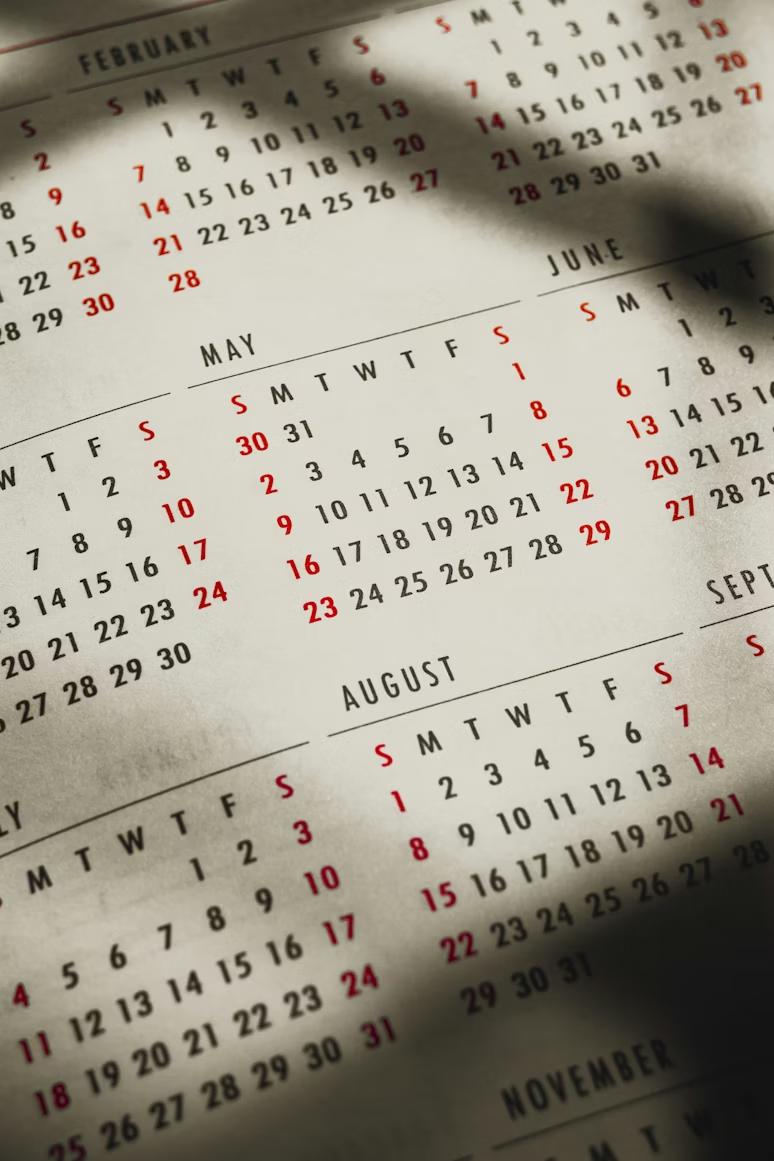
Annual reviews carry a weight that quarterly reviews never do. They sit in the calendar for weeks beforehand, casting a shadow over both managers and direct reports. The reason is rarely the review itself. It is the dread of trying to summarise a whole year into a single conversation, the fear of getting it wrong, and the suspicion that the document will outlive the conversation by far longer than it should. Most of that dread is avoidable. The managers who run annual reviews well do not have less work, they have less last-minute work, because they have been quietly preparing all year.
The dread of an annual review is almost always the dread of starting from scratch. If your evidence is already in one place, the review becomes a conversation, not an excavation.
Why annual reviews feel heavy
It is worth understanding the dread before trying to fix it. Annual reviews are heavy for predictable reasons, and almost every fix is upstream of the review itself.
- Recency biasWithout notes, the most recent six weeks dominate the year. People who had a strong final quarter look like stars; people who had a strong first half are forgotten. This produces unfair reviews even when nobody intends to be unfair.
- Surprise feedbackWhen something only gets raised at the annual review, it lands hard. Either it has been brewing for months and the manager avoided it, or it has been blown out of proportion by being held in for too long.
- Thin evidenceWithout targets, projects, and catchup notes already in one place, every review starts from a blank page. The blank page is the source of most of the dread.
- Performative writingWhen reviews feed into formal HR processes, managers start writing for the file rather than the person. That tone is what makes the conversation feel like a court hearing.
The all-year prep
The single biggest predictor of a good annual review is how well you ran your catchups for the previous twelve months. The annual review is the harvest, not the planting.
- Catchups with notesEven five lines after each catchup adds up to a clear picture of the year. People who do this find that the annual review writes itself.
- Live targetsWhen goals are tracked through the year and updated as priorities shift, you have a real record of what was agreed and what changed. Annual reviews built on retroactive targets feel made up because they are.
- Pinned highlightsWhen something brilliant happens, mark it. When something instructive happens, mark it. By December you have a roll-call of moments that beat any kind of memory exercise.
- Ongoing feedbackAnything you would say in the review should already have been said. The review confirms and contextualises feedback, it does not deliver it.
Structuring the conversation
Annual reviews benefit from a slower, more reflective shape than other reviews. Build in time to look back, look across, and look forward, in roughly that order.
- Look back togetherStart with their version of the year. What were the moments they are proud of? What was harder than they expected? Their narrative often has more nuance than yours, and starting there protects you from imposing a single story.
- Look across the evidenceMove into the targets, the projects, the pinned highlights. Walk through them as a record, not as a verdict. The evidence carries the conversation, you do not have to.
- Look forward honestlyCareer, growth, role fit, and the next year all belong here. Be honest about what you can and cannot offer. Vague hope is more damaging than honest constraint.
- Leave room for what is unsaidThere is almost always something the person wants to say that they have not put on the agenda. Make a clear invitation for it, and give silence room to do its work.
Writing the review document
The written review is for the future, not just the file. Someone, possibly the person themselves, may read it in three years and try to remember what kind of year this was. Write so that document earns its keep.
- Specific over genericReplace every generic phrase with a specific moment. "Improved their stakeholder management" is forgettable. "Turned around the relationship with the data team after the November migration" is not.
- Honest over comfortableIf something needed to be said in the conversation and you said it, it needs to be in the document too. Otherwise the document distorts the year.
- Forward-looking goalsGoals for next year should be ambitious but real. They should connect to the team, to the person’s growth, and to something they are genuinely interested in pursuing.
- Shared, not sentShare the draft and invite edits before you finalise. The review is not yours alone, and shared authorship makes the document something both of you can stand by.
Frequently asked questions
Annual reviews without the all-nighter
Manager Toolkit pulls a year of catchups, targets, projects, and pinned highlights into one place so your annual review starts halfway done.